

Why Focus Isn’t About Doing Less & Talking Product, Community, and Courses

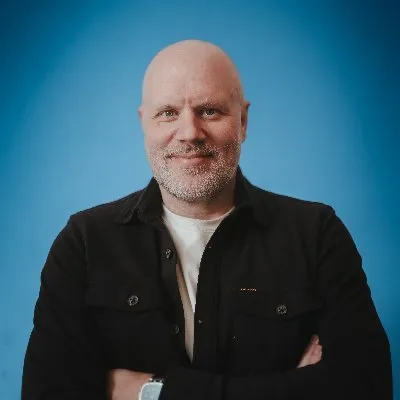


In this episode of the True Operators Podcast, Alex Panagis sits down with Remkus de Vries, founder of Scanfully, creator of Within WordPress, and long-time WordPress operator, to unpack a question that comes up for almost every builder at some point:
What does focus actually mean?
From the outside, Remkus doesn’t look focused in the traditional sense.
He runs a consultancy. He’s building a SaaS product. He publishes a newsletter, podcast, and courses. He’s active across the WordPress ecosystem in multiple ways.
And yet, none of it feels scattered.
That tension between doing multiple things and still being focused is what makes this conversation worth paying attention to.
Building more than one thing on purpose
Remkus didn’t set out with a master plan to build an ecosystem.
Like most operators, things evolved over time.
Agency work led to deeper technical experience. That experience exposed recurring problems. Those problems turned into product ideas. And the knowledge behind all of it naturally became content and education.
What changed over time is the level of intention.
Today, each part of what he’s building feeds into the others.
Scanfully focuses on site health and performance monitoring. Within WordPress captures and shares the underlying knowledge. Truer Than North applies that thinking at a strategic level.
It is not a collection of disconnected projects. It is a system.
From performance to site health
One of the more interesting threads in the conversation is how Remkus thinks about performance.
Most advice in the WordPress space focuses on surface-level fixes. Caching, plugins, quick wins.
But that often misses the point.
Performance issues are usually symptoms of deeper problems. Architecture, infrastructure, and long-term site health.
That shift in thinking is what led to Scanfully.
Instead of only measuring speed, the goal is to understand what is actually breaking or degrading a site over time. Broken links, broken media, failing forms, unnoticed regressions.
Not just performance. Everything that impacts it.
Turning experience into products
A big part of this episode is how Remkus turns years of hands-on experience into something scalable.
Not just through software, but through education.
His courses, starting with Make WordPress Fast, are not built around shortcuts or tools. They are built around understanding.
How the web works. Where performance issues originate. How different layers interact.
It is deliberately deeper. Sometimes less immediately exciting. But far more useful over time.
That same philosophy shows up across everything he’s building.
Product decisions and what not to build
Another recurring theme is restraint.
Even with a clear roadmap and plenty of ideas, Scanfully is not trying to become everything.
There are obvious adjacent directions. Site management, broader tooling, more features.
Those are not being chased blindly.
Instead, the focus is on going deeper into a specific problem space. Site health and performance, done properly.
That means prioritising features that align with the core philosophy, and ignoring ones that do not.
It is slower. But it is deliberate.
Bootstrapping and control
Remkus also shares his thinking on funding and why he has chosen not to raise external capital for Scanfully.
The trade-off is straightforward.
Funding can accelerate growth. It also introduces pressure, expectations, and competing priorities.
For now, the decision is to stay independent, move at a controlled pace, and build the product according to a clear vision first.
It is not about avoiding growth. It is about controlling how that growth happens.
So what does focus actually mean
By the end of the conversation, the definition becomes clearer.
Focus is not about doing one thing.
It is about understanding why each thing exists, making sure they reinforce each other, and being intentional about where time and energy go.
You can do multiple things.
As long as they move in the same direction.
We dig into
- When multiple products actually make sense
- How Scanfully came to life and where it is going
- Why most performance advice falls short
- The role of education in building better products
- How to prioritize what to build and what to ignore
- Bootstrapping versus raising capital
- A more practical definition of focus
About Remkus de Vries
Remkus de Vries is a WordPress performance expert, product builder, and educator with over 20 years of experience in the ecosystem. He operates across SaaS, consultancy, and education, helping companies build faster, more scalable WordPress products.
Episode Transcript
[00:00:00] Remkus de Vries: Caching doesn’t solve performance. If your hosting is crap, if your theme is bloated, your caching plugin won’t solve that problem for you. If you look at things from a holistic perspective and as a mutually beneficial system of how things interconnect, it makes a lot more sense for me to focus on promoting my own stuff and tying it into each other.
We have very strong opinions on where we want this thing to go. If that means we’ll go slower, we’ll go slower.
[00:00:28] Alex Panagis: Welcome back to the True Operators Podcast. I’m your host, Alex Panagis. Joining me today is Remkus de Vries. Remkus is the founder of Scanfully, the creator of WithinWP, the WordPress podcast, newsletter, and now courses, and he also runs an agency, Truer Than North.
He’s spent well over a decade deep in the WordPress ecosystem across hosting, consultancy, agency work, community and events, and now SaaS as well as education through his content. Today, we have a lot to talk about, largely because Remkus is very clearly someone who also likes to keep busy and have his hands in many things at the same time.
So first of all, Remkus, thank you for joining me. To kick things off, let’s rewind a little bit and set some context for everyone listening. You run a few things today, so rather than jumping around before we provide any context for people, I’m very curious how you explain each of the different things you do right now and what role it plays in the bigger picture of what you’re trying to accomplish, starting with Truer Than North, because I know there are some exciting recent changes there.
[00:01:37] Remkus de Vries: Yep, there are. Well first of all, I’m happy to be here. I always enjoy our conversations offline as well, so happy to do this in digital form.
Yeah, where to start? Before I did anything monetized in WordPress, and this is well over 20 years ago, I wrote about what I learned related to WordPress, but it was in Dutch. I didn’t really have a plan with it other than I learned from others, so it felt natural to me to do the same thing.
I’ve always worked at the intersection of tech and non-tech. To give you a little context, I used to work in a large HR department for one of the largest insurance companies in the Netherlands. I was working in IT, having to translate all the things IT needed to build and maintain for the HR department and vice versa. I noticed I was good at it and liked doing it, so a lot of educational stuff was already in there.
So when I started diving more into WordPress and leaving that company to start for myself, that teaching and learning, as I do as one, just became a natural thing to do.
So that quickly escalated into running my own WordPress agency. That’s been happening since 2006. And everything else that I’ve done, and I’m doing now, is something that for a large part, let’s say for 15 years, was kind of just happening, not really making conscious decisions other than, this is what I don’t want to do, and I kind of want to focus on this.
And that focus was mostly complex sites. Sites that had to do with performance, sites that had to do with scaling, sites that had to do with complexity. I like complexity. I need complexity in my life on the work side of things. So yeah, that’s kind of how things started.
And my agency that I started then has gone through a couple of names, but it ended with Truer Than North, which you already alluded to, and that has changed in 2026. I still have my agency, but I have the Dutch version, which is not a brand you’ll know. I’ll give you the name, Bureau KREAS. But Truer Than North is essentially an alias to that limited company.
What Truer Than North is switching away from is the traditional agency work. For the last couple of years I’ve been doing more and more WordPress consultancy, and not consultancy as in how do we build this site, but consultancy for other companies wanting to understand how to better integrate into the WordPress ecosystem. So that is currently what Truer Than North is focused on.
It is akin to what Jonathan’s Guild project did not too long ago, because that is currently in transition to basically be disbanded. Jonathan and I had a conversation about this, and I told him I’d already been playing with this idea in my mind. I want to facilitate my services better for companies that want to do deeper integrations into the WordPress ecosystem.
And he essentially said, look, you’re a perfect match. You should do this. You have my blessing to use the name and whatnot and all that. And I basically said, I don’t need to use the name. I’d like to use the word Guild for something else, and I’ll explain a little bit more about that later.
But the mission of what Truer Than North wants to accomplish is something I’m entirely switching away from the agency model for. That’s not to say I don’t build sites anymore. I do. But it’s not the thing that I’m actively promoting.
[00:06:13] Alex Panagis: Nice. Would it be fair to say that that’s a narrowing of focus now that more of your time is on WithinWP and also taken up by Scanfully?
[00:06:21] Remkus de Vries: Yeah, absolutely. Yeah.
[00:06:23] Alex Panagis: Nice. So, okay. I’m sure we’ll come back to the Truer Than North stuff, but because it’s also the most recent thing that’s top of mind, you recently launched your first course and I think we’ll slowly start to see how it all fits together, on making WordPress fast.
What exactly is your overall vision with the courses and how they serve Truer Than North versus Scanfully, and the benefit that you have to that? Because obviously the topic of the first course, WordPress performance, heavily benefits and conveniently ties in with Scanfully. I would say less so with the other side, but you’re still building an audience and expanding your reach within WordPress, which ultimately still benefits it. So I’m curious to see what your overall vision is.
[00:07:08] Remkus de Vries: If there’s one thing that I aspire to be, it’s a polymath. I’ve never been a specialist in one thing. My hobbies have always been all over the place. I see a lot of red threads in what I find interesting and what I work with and what I focus on. Other people don’t necessarily see that the way I see it, and that’s fine. They don’t need to.
But that explains a little bit why it might seem like, oh, he’s doing this and he’s doing that, and how does it all tie into each other?
So for me, about three years ago, I stopped working for Servebolt. It’s a hosting company that highly, or I should say hyper-focuses on performance like no other hosting company. I enjoyed working there a lot, but I found myself doing the things I didn’t particularly enjoy too much. I was part of the management, I had shares, the whole thing. I was embedded deep.
So when that ended, I needed to figure it out. Am I going to do exactly what I did before? So that’s mostly agency stuff and partly consultancy. I kind of took a year to slowly figure that out.
As I was doing that, I found out that I really do enjoy the education side of things, and not just because I like teaching as a principle, but mostly because I see a lot of stuff being done and handled in the wrong way. Like, you’re doing it wrong, you’re thinking about this in the wrong way.
And performance and security and site health-related stuff is very easy to just follow the advice you see everywhere. But basically all that type of advice that you see on blogs and people post on socials and whatnot is copied. They’re not really understanding the layers they’re going through.
So I started making more noise about that, and these have always been principles that I’ve held in how I did my work. I just never really talked about it in a dedicated way.
So I basically said, I see an area of product that is not being done properly, for one. And secondly, if it is being done, it’s being done inside of WordPress. And that doesn’t make a lot of sense because if you look at WordPress and the stuff that you can do inside of it, it all has its limits because you are hosting it inside of WordPress. So you’re bootstrapping the whole thing of WordPress if you’re doing something simple like security, performance, site health monitoring, all that sort of stuff.
So one of the guys that I still do work a lot with outside of the normal stuff that I enjoy doing, I would hire Barry. Barry is a fellow Dutchman. We actually pronounce it “Bah-ry,” but let’s not complicate things. I’ve known him for 15, 16 years, I guess, as part of the WordPress community. We’ve organized WordCamp Netherlands together. We’ve been to meetups together. And we’ve worked together for about 10 years now, where I would hire him as a freelancer to do mostly the backend coding type of stuff. I don’t enjoy doing that. He loves doing it, so it’s a great match.
I asked Barry, here’s a problem that I see. What do you think? And as we talked through that, he was immediately excited because he saw the same gap as I did. And from that, we founded Scanfully.
Now, Scanfully is a site health and performance monitoring tool. We have uptime monitoring, we have certificate health and all that sort of stuff, notifications. But the thing we’ve been working toward for the last, let’s call it 18 months, and rewriting what we needed to do because we quickly found out we needed to be building stuff for bigger scale. We had a few huge sites doing just massive amounts of data, and that forces you to rethink how you build your SaaS very, very quickly.
We ended up focusing more on the site health thing than the performance side of things, because site health things that are not going well impact your performance, but in a different way. And they impact your UX, your user experience.
So what we currently have in there that I think are the core features we’re going to continuously build upon much more than, for instance, an uptime monitor, are broken links. We have a WordPress activity log. And in about a week we’ll be launching broken media. So that’s your embeds, your iframes, and all that sort of stuff that’s hidden somewhere in your site and you have no idea how old and non-functional it is.
So the goal here is, by scanning for it, we also want to do the educational side of things. We want to teach you why this is something you need to pay attention to. The amount of rot that is inside websites absolutely blows the mind when you start seeing these scans and how much is being found. It’s ridiculously much.
So that’s essentially where Scanfully goes, and there’s some educational base layer in there, but not necessarily something that turns into a course or whatever.
But as I started doing this more and more, I realized on the side of performance, on the side of security, on the side of tooling, stuff that you use to build your WordPress sites, there’s a huge educational gap because most of the content creators out there, I should say WordPress content creators, have a focus on a particular tool and some stuff around it. So for instance, they’re wild about Bricks or Elementor or things of that nature.
And as good as it is to have somebody cover those topics, I find myself seeing content that just absolutely glazes over the base essentials. Like why do you do it this way? One of the things you may have heard me say or seen me type is, caching doesn’t solve performance. And it isn’t until you wrap your head around what that actually means that you start to see the value of caching, but also the limitation of caching and what it hides.
Like if you’re on an e-commerce site, caching doesn’t do anything from the moment somebody puts something in their cart. If your hosting is crap, if your theme is bloated and just slowing you down, your caching plugin won’t solve that problem for you. And you need to understand that if you are to understand the problems that you need to solve.
And then when you dive into that, you realize it’s a whole bunch of layers that all tie into each other, making your site fast.
So from that I realized it’s probably smart if I focus on more evergreen type content for courses. And that resulted in my first course that is currently still in pre-launch, but only for a very short time because it’s about to be fully released. That course is called Make WordPress Fast.
And I literally cover every single angle, everything that matters. So I help you understand the network layer. I help you understand the encryption layer. I help you understand all the dry bits, because it is dry. The first, let’s call it 10 modules, that’s dry. There’s not a lot of fun in learning that, but you need to learn it because everything else you’re doing on the “I need to fix this” side is based upon understanding where you need to fix it and in which layer you need to fix it.
And sometimes you need to fix, I don’t know, faulty DNS settings. Sometimes you need to just upgrade to a faster DNS provider. I have seen examples where that shaves off 300 milliseconds, and when you’re fighting for your site to be loaded under a second, that’s the thing that matters.
That’s a long-winded answer, but that’s basically how that journey went.
And all the educational side that I’m doing is essentially the brand Within WordPress. Yes, it started with a newsletter. I added a podcast, you’ve been on it, and the courses are being added to it. And the next step is that Within WordPress will have a membership component where, if you’re part of it, you have access to all the courses, but you also have access to spaces that are all designed to help you learn about the new stuff coming, updates to existing stuff, all that sort of stuff.
So I have a space in there that’s called WordPress and AI, meaning we only talk about all the things available to us in the world of AI connected to WordPress. Not AI in general, but WordPress and AI.
I also have a space in there that’s called Release Labs. And Release Labs is a good example of: every single time WordPress has a new release, you want to know what it brings to the table. You want to know the new APIs. You want to know the improvements to the APIs. You want to know the deprecated stuff. You want to understand, oh, we have a new two or three versions of caching internally. Am I still doing it the right way? Should I be updating my approach?
All of these types of questions, because you’re generally too busy to figure out where to look for these things. You kind of miss that and you go, yeah, I’ll cross that bridge when I get there and I want to solve that particular problem. I want us to level up before it is a problem. I want us to understand that every single time you are doing something, or optimizing, or doing maintenance, you look into the thing understanding the thing.
[00:17:56] Alex Panagis: That makes a lot of sense. Not to focus on the very last thing that you’re talking about, which I assume is the Guild component of that. Yeah.
That’s the type of thing, and this is a completely other conversation, but if WordPress were run more like Webflow, it would probably be done by the company themselves as developer experience, developer education. And I think it is definitely needed.
[00:18:21] Remkus de Vries: We have the developer blog, and What’s New in WordPress every single month is valuable, incredibly valuable. But I think there needs to be way more happening. There’s a lot happening between those monthly updates.
I just listed a few spaces of things that I find valuable to have as part of the Guild. But I think there’s a place needed in the WordPress ecosystem that focuses not necessarily on the agency growth side of things, because there are a few other membership sites, and not necessarily one that’s hardcore dedicated to one or two specific tools. I think there needs to be one that is on the educational side of things, but mostly on the leveling-up side of things.
I keep coming back to those two words, leveling up, because it is just that.
So anybody who wants to understand how to become a better WordPress builder or developer, they need to understand the tool. I don’t know how many times you’ve seen it, but if you have PHP knowledge and you build something for WordPress, you usually just skip the APIs that WordPress has internally, like the HTML API. Perfect example.
If you just entirely skip the HTML API and do all your regex raw, you can, absolutely. But we have the HTML API, so it makes sense, if it’s there, to use it because it is an easier way to use the same complicated regex stuff.
So it’s things like that. Why are we not using it? Why are we not promoting it? Why are we not giving examples of how to integrate this, and why, and what the benefits are, in a structured way?
So yeah, that’s essentially what the Guild is going to be. And for the record, all my courses are in the Guild as well, so I am conflating a few things. But ultimately you can be in the Guild and just have one course. You don’t need to become a member for the whole thing, but you can.
[00:20:36] Alex Panagis: That’s actually a prelude to my next question, which is now that you have paid products, membership and courses separately, but with some conflation between the two, I’m curious how that’s changed your view of what you’ll put onto YouTube as free resources going forward, and how you as software founder of Scanfully, but also the creator of the memberships and the courses, decide: this is something that makes sense as a lesson in the Make WordPress Fast course because there’s this new performance-related thing that we need to talk about in that course, versus this is something that would go in the community, versus this is something that would go out as a free resource for everybody.
[00:21:16] Remkus de Vries: I’m a big believer in the principle that is the base for open source. And that means, in principle, I think there’s a give without expecting something. Because if we all do that, the world just becomes a better place. Not necessarily those on the left side of the spectrum or the right side of the spectrum or just the middle. Everybody benefits. And I like that focus of open source.
Does that mean you can no longer be commercial? I think you still can. But I think it’s less of an, oh, let me think about if I want to share this publicly here, yes or no, or do I consider this a great opportunity to, one, be out there, second, help people understand the concept better, and thirdly, maybe this is the driver that I can use to have people understand there are other ways of connecting to knowledge as well, which would be either my courses or the full membership.
I don’t have a specific goal or method or tactic to do this type of content like that and the other type of content like this. But at a certain point it makes sense to talk about the things that are inside the courses, or the educational stuff that is in general going to be in the Guild. It’s more like what makes sense in the moment that I discover it.
[00:22:52] Alex Panagis: Makes sense.
[00:22:53] Remkus de Vries: At this point, I can’t tell you.
[00:22:55] Alex Panagis: If you come across a new tool… sorry, go for it.
[00:22:57] Remkus de Vries: No, I was going to say, at this point I can’t tell you when I’ll make what decision. It’s just going to be what it is.
[00:23:03] Alex Panagis: Makes sense. So you’re playing it a bit by ear as it comes, I would say.
That makes sense on the surface. My only fear with that would be there’s only so much that you can do. And there’s also the element of, if you’re going by the open source mentality, I suppose if something is a free video that you release freely on YouTube, that doesn’t necessarily mean the same topic couldn’t be covered in maybe slightly more depth in a paid version of that same video.
[00:23:33] Remkus de Vries: Yeah, yeah, yeah, for sure. I mean, it’s not black and white, right? It’s not just WordPress stuff on YouTube but not WordPress stuff elsewhere, or vice versa. I don’t think it works that way. But you are right. If I’m going deeper, then that will be part of the membership.
[00:23:56] Alex Panagis: Those are less engaging for YouTube anyway. The format that would work for YouTube is probably slightly different than what the people that paid for the course would enjoy.
[00:24:06] Remkus de Vries: Potentially. This is something I’m going to test by treating it as a business. Whatever I’m going to put out on YouTube, every single link will be tracked. We’ll figure out what the impact is. How does this content, this video, drive people to understand more or want to learn more or even click on and be curious about what’s part of the Guild, what’s part of the courses, stuff like that?
I think that’s what I owe it to myself, to be smart about that. Understanding that I’m not going to know all the answers, but because I like to look at everything from a very wide lens, from many different aspects, that’s what I end up doing. So I might as well incorporate it into everything else that I’m doing for Scanfully, for Within WordPress, and for sure for Truer Than North.
It’s never a black-and-white situation. There is always nuance, and it always makes sense to measure the thing you’re doing and base your further decisions on that.
[00:25:18] Alex Panagis: So you might have, for this one I’m pretty sure I can predict what you’re going to say based on that, but do you see that there will ever be a face other than Remkus in Within WordPress resources, courses, and also subsequently the Guild?
[00:25:32] Remkus de Vries: Yes. Yep. Absolutely.
[00:25:35] Alex Panagis: Nice.
[00:25:35] Remkus de Vries: Like I said, on the hardcore backend side of things, I have a limited curiosity. I want to understand the thing. I want to understand how you can use it. And sure, I can put in the time and effort to write it out in an in-depth tutorial or a video or whatever. But I’d much rather have other people do that for me and pay them, and also find a way to monetize their skill set, which a lot of people find very, very difficult to do.
[00:26:14] Alex Panagis: Makes sense. It might be a bit early to say, considering it’s still in pre-launch, but I know it is actively available to purchase as well, the course. Have you been surprised so far by who the course is resonating with most?
You don’t seem to go into doing anything with a preconceived notion. Positively, this is a compliment. With Scanfully, and based on other interviews I’ve watched that you’ve given about it, and also just generally how you talk about it, it’s not so much like, oh, if we don’t achieve X by this timeline, then it’s a success or a failure. It’s very much that the whole process of doing it is the only thing that you’re interested in, and through that you can only learn stuff and decide what to do next.
Without doing it, we don’t know what we ultimately want to achieve.
But with the course so far, the people that have been finding it most useful, who would you say, if you had to put a specific label on it, is it agency folks that are starting their career, WordPress developers, individual site owners?
[00:27:14] Remkus de Vries: I have a handful of site owners, but the vast majority is WordPress builders or WordPress developers, less so on the hardcore backend developer type of stuff, because they generally are forced to look at performance that way anyway.
But yeah, builders, developers, and thus agencies are the vast majority.
There are also companies who bought the agency license where they essentially said, this is something every single person in our company needs to understand, so you’re just going to have to go through this course.
Like I said earlier, the first modules are dry because the subject matter is dry. It’s just what it is, and it’s one of the reasons why people skip it.
If you are starting my course now, you will end up in a situation where you have a better grasp of the whole mentality, the whole philosophy of performance. And that’s essentially where you need to be.
I’d argue it’s even less about very specific little tricks of how to do very in-depth stuff. It’s more about understanding the base principles and understanding that if you do this, it has an impact. It could be a positive impact, it could be a negative impact, it could be in the wrong layer.
And what I mean by wrong layer, for instance, is caching should not live inside of WordPress. It shouldn’t be generated, in my opinion, by a plugin that generates the HTML and then just stores it internally and in a reduced bootstrap serves that as HTML as front-page cache. I think this needs to live before the site or the server is actually invoked, so at the edge.
If you don’t understand the edge, that’s a thing you by now should understand. My absolute preference for that is using Cloudflare APO, meaning you can generate your cache locally, but it shouldn’t live locally. It’s just not the right place to do the thing.
So that’s a philosophy, a philosophical approach of looking at what performance is.
Does that mean you shouldn’t understand Query Monitor? Yes, you should. You should also understand how to optimize your options. There’s a whole bunch of stuff you need to understand. Core Web Vitals. You need to know the impact. But you need not just to chase the numbers. You need to understand what it is you’re doing, what it is you’re measuring, and instead of just going for everything green, you need to understand what got you to the green other than fixing it at the end. You want to do that while you’re building.
So it’s more philosophical, and then also obviously I cover the tools, but it’s more focused on the philosophical side of things, because that generally means you have a better understanding of the whole, and thus you make better-informed decisions everywhere.
[00:30:44] Alex Panagis: When you started Scanfully with WithinWP, the courses, the whole thing, and I always say this, I find that with what we do, because we do it with multiple companies, the benefit we have is that one small, seemingly small problem, performance for example, is a pretty good one. Performance is a problem for an individual site owner. Depending on their scale, obviously, the importance of it matters. But let’s say it’s big enough and they have money to throw at the problem because they want to solve performance. They understand there’s clear value in it.
That for an individual person or developer working on a WordPress site is probably a week’s worth of work, or a two-week project cycle where they would focus on improving the performance of a site initially, and then on ongoing checks and balances to make sure they don’t do things that negatively impact the performance of the site.
I think that you, through your work on the consulting side, have had the benefit of seeing those problems so frequently that the questions come up more and more frequently. I’m assuming that Scanfully, at least to some degree, is also built with the logic of, okay, we now have education on performance and, more broadly, on how to build WordPress sites with a really strong foundation if we put it into the site health category.
And we also have this complementary, very conveniently placed software product, which allows them to monitor that, keep it in check, and essentially verify that the things that we’ve put into place through our courses and our training are still actively in place.
So I’ve understood that the model ties very closely together, which I think, when we’re talking about priorities and focus, is a good way to frame it. Everything that you do in WithinWP and Truer Than North actually goes way further because you also have Scanfully, and vice versa. The benefit of building Scanfully comes back to the people that you have in WithinWP, in the audience and everything.
So essentially, as opposed to seeing it as a lack of focus, like I think you said yourself a lot of people put it down as, oh, there’s a lack of focus, this person is involved in so many different things, I actually think it’s almost a prime example of having a careful selection of complementary things that complement each other so well that actually everything you do on any one of the three or four things compounds and has a greater impact on all of them.
[00:33:19] Remkus de Vries: Yeah. When I exited Servebolt and took my time to figure out how I was going to do this, this is what I was thinking. As I was doing one thing, I understood how that would lead into the next and tie into the other, and vice versa.
And there are a few more things in the pipeline that I haven’t even discussed that will also see the light of day at some point.
If you look at things from a holistic perspective and a mutually beneficial system of how things interconnect, yes, there are different domains. Yes, there are different brands. Yes, there are different approaches to how to grow the thing. But ultimately it means that if there’s an opportunity, it makes a lot more sense for me to focus on promoting my own stuff and tying it into each other than randomly doing that for somebody else’s product.
That’s not to say I won’t, but it is to say I understand how one thing ties into another. So obviously in my course I’m going to explain to you what Scanfully does and why it’s a smart decision to have that connected to your site. But I’m also going to explain to you why, from a technical perspective, it makes sense for Scanfully more than other tools.
There are other activity log solutions, but the vast majority does that locally in WordPress, and one or two offer a hosted version as an upgrade. And we’re just going, but this should be the default, and the upgrade should live even further in that direction and not compromise whatever we’re doing on the WordPress side of things.
So every single principle I have an educational component in, I also reflect back into how this product should look and why we are doing this, why we are choosing this.
There are plenty of other products that I can add to this, and there are plenty that make a lot of sense from the outside, but from the inside we go, yeah, no, no, no, that’s not it. It may look like it’s very natural for us to also do that, but it isn’t, and here’s why.
One of the things we’re working on is that everything we build in Scanfully is API-driven, meaning everything is modular. So if you’d like, as an extra to the service you’re offering, to offer your clients insight into the findings that we have, from site health to uptime to the status of certificates to, at some point, a vulnerability scanner, broken links, broken media, activity log, and you’d like to make that available as a hosting company, as an agency, or as whatever, we have built it in a way that you can do that in a resource-friendly way without having to reinvent the wheel.
That’s where we have our focus. That makes sense.
But we’re not adding stuff to it that currently doesn’t make a lot of sense for us to focus on. One of the things we don’t have is management of sites. Some people think that’s something you should have, maybe. But that’s not where our focus is.
We focus entirely on site health and performance health, period. Does that mean we’ll never do site management? I don’t know. But that’s not our focus currently. We focus rather on making the things that we do be in line with our design principles, our performance principles, and all that sort of stuff, and being as smart as possible about all the solutions where we think things should not be done by WordPress itself.
It doesn’t make sense for a WordPress activity log to log everything into the database, because if it crashes, you’re done. We have a whole bunch of redundancies going on. So even if we were to crash, we still can find all the data and replace that.
That’s a principle of how you look at stuff that just makes a lot of sense. If I can just look at that site without invoking the site, that’s a win. That’s a performance win. There are a whole bunch of perspectives where that type of stuff just makes sense to do it that way.
[00:38:04] Alex Panagis: So from a philosophical standpoint, you do want to stay very focused on the performance side, but equally you aren’t ruling out that at some point, like vulnerability for example, and you could argue there’s a tight link between performance and security, and I would agree with that, but you’re saying other elements of it that are complementary and make sense are the direction that you’re going to take the product in.
So far, and I know it might be a little bit early, but maybe not necessarily because I think there are new features that, from my understanding, may not have been part of the initial roadmap, like broken media embeds.
Perhaps another example that you maybe do have. I’m curious, so far from the initial early access and people that have been using the product, has it changed your and Barry’s view based on opinions you’d developed through your work, and then you released it and realized, actually, we find this independently really valuable?
Because I think, as you’ve seen it, we’ve seen it with a lot of software products, with different levels of success, where basically you end up tacking on various features that you can argue are not really core to the mission that the product set out to solve, but it’s in pursuit of growing the product.
And I think your view of how you’re growing the product is probably that you are not in the position where you need to do that. So you’re not going to chase turning Scanfully into a site management solution as well purely because you want to capture market share from competitors there.
So my question is more how do you look at when you would place a bet like that? How would you decide that site management is clear territory that you do want to go into?
[00:39:43] Remkus de Vries: When we get there, that means we will have covered every single angle from the site health and relevant performance monitoring we can do.
I’ll give you two examples of things that we have on our roadmap but that have moved position.
One is profiling. We have found a way to do profiling in a resource-friendly way so it doesn’t constantly have to run inside WordPress. That’s hyper valuable, but we opted to go deeper on the site health things first.
We also have on our roadmap the idea to find a way to capture Core Web Vitals and their actual results so you can see over time what’s happening. For instance, when you do an update, to generate a report like, oh, we see that you updated a bunch of plugins. These are the changes in your Core Web Vitals. So maybe you want to reconsider. Maybe a plugin here is causing harm. That sort of stuff.
So the reporting side of things, we understand that’s something we need to have. But currently we focus more on the site health type of stuff. And that’s because one of the other features we had later down the line, so broken media was planned a little later, but something that was further down the line that has been brought forward is form validation.
And I don’t mean form validation in the sense of, let me just check if the form is there. Theoretically you can use AI to do that, just ping your site and go through it. But we’re inside WordPress, right? We have our Scanfully plugin that connects your site to our dashboard. So what if we can do all the variations of form validation on the outside and on the inside and on the delivery side?
Now that’s where true site health becomes, okay, this is just something I can’t miss having. I need this, I want this.
And when you have form validation in there, the logical next step is looking at things on the e-commerce side of things. So WooCommerce, all of the steps that it goes through from displaying the product, adding to cart, going to cart, filling out the form, checking out, and everything that comes from that.
Those are all things that you want to know are working whenever you’re doing whatever update, because on the most positive side of things, you are testing for this with every single update. But realistically, a lot of agencies just kind of go, let me double-check what WooCommerce is doing. Alright, looks good. Okay, go ahead. And stuff gets missed.
I have an opinion on that, but I also understand that’s just the way of the world.
But what if you could just rely on us telling you, hold on, your cart is no longer working. Or hold on, checkout is no longer an option. Or hold on, there is no payment provider displayed. That’s the type of stuff that we think is site health, which is why we’re focusing more on the site health type of stuff right now for 2026, and then later look at all the stuff that on the performance side makes more sense.
So yeah, there are things that have shifted in sequence and importance, but it’s not necessarily that we have a lot of topics that are just brand new now because we learned this or that.
We are listening to feedback, but it’s also more about let us display how we want this thing to work in full before we actually start listening too much to feedback like, oh, we need this feature or I need that, wouldn’t it be lovely if you had this?
Site management is something that has been requested a few times already. I don’t see it in 2026, certainly not, but I don’t know.
[00:43:56] Alex Panagis: Nice. If I had to distill what you’ve just said, or your blueprint on product thinking that you’ve just outlined, it is start with very strong conviction on what the core functionality should be and be open to revisiting it, which is also fundamentally, I would argue, in most companies, if you were to say we have unlimited timeline and unlimited resources and we could do everything in one month that would realistically take five or 10 years to build, hypothetically you could even find a trajectory where Scanfully becomes a hosting company, which I think is a path you’re never going to go down based on my understanding.
[00:44:35] Remkus de Vries: You could, but you could. Yeah.
[00:44:36] Alex Panagis: The site management angle based on the updating functionality, which I think is something WordPress absolutely needs, and I think it would be hard to argue otherwise.
Equally, and this is where the commercial side of it becomes interesting to me, and I’m not sure how much of it you want to share, so feel free to stop any line of questioning.
With the commercial line of thinking, you also have to consider, let’s say you want to partner with site management tools.
[00:45:06] Remkus de Vries: Yeah.
[00:45:06] Alex Panagis: You also now have the element where a hosting company, which I’m going to blur out because I don’t want to name and shame, is not particularly synonymous with performance.
[00:45:16] Remkus de Vries: Correct.
[00:45:16] Alex Panagis: At least not in the last five or 10 years. However, their view of product, and I think increasingly with AI the view of product at most bigger companies, is less about integrations and more about why would we integrate with a tool that we can build because we have an existing massive team that is able to build that.
[00:45:38] Remkus de Vries: Yeah.
[00:45:38] Alex Panagis: Now obviously long term, and you can share as much or as little as you want, but there is always the Scanfully vision. I’m sure it has elements of how do we make this so difficult for another company to just build in a month, so that the value isn’t just the feature set, it’s also the architecture, the infrastructure component.
[00:45:55] Remkus de Vries: Correct.
[00:45:56] Alex Panagis: That would be too difficult for most. A hosting company or a site management tool isn’t just going to spend a month or two dedicated to building something because they obviously wouldn’t be able to build it.
[00:46:05] Remkus de Vries: Correct. That is the mindset.
[00:46:08] Alex Panagis: Amazing. So the commercial question is then, is the focus right now individual users, hosting companies, integrations with site management software, or are you just essentially exploring all options right now?
[00:46:22] Remkus de Vries: We’re not actively reaching out. For us, the focus is more on let’s make the suite of things we offer as compelling as possible for agency owners and site owners so we become the logical choice when we’re talking about the broken link manager, broken media, activity log. We want to dominate that space.
We have a long way to go there, both on the feature side and on the recognizability side of things, but that’s fine. We’ve got time.
So 2026 is actively about building on that growth side of things as well. That means we’ll have a lot more articles, a lot more explainers, I’ll have videos, all of that that leads into it. So there is a plan.
[00:47:25] Alex Panagis: What you’re trying to say is that Scanfully as a product, it’s not that it’s too early stage to sell it to individual users, but it’s almost that in your view, and as a self-critical person, because I see some similarities, you want to focus on developing the core product further with the core user base that you have so far, make it as valuable as possible, so that when you enter conversations with a hosting provider or site management tool, that conversation becomes easier versus if you try to push it uphill now, it’s a boulder.
[00:47:57] Remkus de Vries: Yeah. That’s the correct summary. I was gathering my thoughts on how complete I wanted the answer to be, but the gist of it is yes.
[00:48:08] Alex Panagis: And—
[00:48:09] Remkus de Vries: Yeah, no, go, go, go.
[00:48:11] Alex Panagis: On the marketing side, this is more of an implementation detail, which to you is to be figured out, or maybe the answer is both.
Do you picture growth initiatives for Scanfully as not distinctly different from growth initiatives for Within WordPress, your personal brand? So far, and maybe this is subject to change in 2026, is the plan to keep Scanfully relatively separate, at least to have its own sort of marketing and growth side? Or will all the growth from Scanfully continue to come from Remkus as a personal brand, the Within WordPress podcast, and stuff that you do there? Or will it also have its own independent thing?
[00:48:55] Remkus de Vries: Both. It will be an extension of me, my personal brand. It will be an extension of everything else that I put out there. It will be something that I will push forward when I see an opportunity to do so.
But when we have broken media in there, the Scanfully communication side of things will increase tremendously. So that means we’ll be out there in many more fashions. I don’t know if that means sponsoring here and there or having some content creator highlight us, or do a comparison or a demo walkthrough. I don’t know. I don’t have those answers yet.
But there is a vision of when we think the suite is as complete as nobody else is doing, and when that is the case, which is most likely the beginning of Q2, then we can position ourselves to be the most obvious choice to solve these problems.
Does that mean we’re going to easily chip away customers from other solutions? Maybe, maybe not. But any new site, any new company, any new developer, or a developer who hasn’t learned the importance of these things, they’re going to start looking at us as the primary way to solve the problem.
So that’s essentially the focus, and the communication and marketing on the Scanfully side will be from that perspective. I will cover it anywhere and everywhere.
I’m working on a talk right now and I can’t disclose where that will be, but it’s essentially: here’s what you by default do to create more performant sites. But hold on, once you have them, here are a few things that are secondary influences on performance, or the perceived performance, or the UX that leads into performance, and then site health things just make a lot of sense.
That sort of narrative that I’m working on in a presentation somewhere, that’s going to be something I as a person will be talking about on YouTube and all that, but that is also very dedicated from the Scanfully side of things. Those two are pretty much the same on that layer.
But yeah, there is not a clear distinction between where my branding stops and where Scanfully starts. That said, there will be stuff coming out of Scanfully that might not necessarily be verbatim what I’m also going to share. I’ll share a different version of it.
[00:51:49] Alex Panagis: Diverge a bit.
[00:51:50] Remkus de Vries: A little bit, but not too much. To the point that it makes sense, to the point that the branding and positioning of Scanfully is clear.
On my personal branding, I can just say certain hosting is shit.
[00:52:04] Alex Panagis: Mm-hmm.
[00:52:05] Remkus de Vries: On the Scanfully side of things, I can say, yeah, your hosting is shit, but hey, you’re working on wanting to do the thing smarter and better. Here’s our integration. You know what I’m getting at?
[00:52:14] Alex Panagis: The hosting recommendations question was going to be one of them. If in the course you’re making active recommendations to use certain hosts only, and this is more long term when the hosting angle becomes relevant for Scanfully, it probably becomes quite difficult to sell any of the other hosts that you don’t recommend because they’re like, well, you’ve kind of…
But I think your point is that you draw the distinction and treat them as separate, and you don’t let your role as the course creator, where you have a duty of care to the people you’re educating, get influenced by the business side of Scanfully to say, okay, because we’ve partnered with X company, that’s going to lead to recommendation.
Obviously there’s always going to be a little bit of a bias, but I think you’re obviously somebody that can protect themselves from actively doing that.
[00:53:04] Remkus de Vries: There’s a little bit of extra context that I need to give in terms of what my recommendation looks like for hosting.
I essentially explain there are four layers of WordPress hosting, going from unoptimized to okay to good to great. I’m not saying you can’t use good hosting or optimized hosting. That would be the base level I would recommend. I’m not saying there is no scenario where I wouldn’t recommend that.
What I am saying is you need to get smart about the decisions you make. Meaning, if you have a site that has performance issues, you don’t want to be throttled in any way, shape, or form, so you will need to go to good or preferably great hosting.
There are examples that I give, but I don’t categorically say, just use these three and you’re good. I don’t think it works that way.
There are hosting companies that are on the performance side of things, kind of okay. And that’s fine if your clients are in that category where, if you do it smartly, you have lean and mean themes and it just does what it needs to do. There’s no e-commerce side of things, there’s no complex setup, there are no huge sites. Do you need the fastest blazing-fast hosting? No. You’re probably better off with a $5 a month Cloudflare APO thing, so that costs you $60 a year, but you have your site as minimal as it is on the hosting side, and you have blazing-fast edge caching.
But as soon as you are adding more complex things, I have bigger opinions on what your hosting should be able to do. There are quite a few good hosting companies in the WP ecosystem that by default limit your CPU or your PHP workers and that sort of stuff. I am of the opinion that great hosting does not do that. There are no limits.
So yeah, I have opinions and recommendations, but they’re not as black and white as just use these three and you’re good. No, it depends.
My kids ask me questions all the time, right? And one of the things, as a father, I’m there to educate. I’m there to help them see insight and learn how to think, certainly when they’re young. Oftentimes they would have a question. I remember when Rowan was eight or nine, he asked me a question and the first thing I said was, it depends, because what is the context here? And he goes, I don’t know, I just have a question. Yeah, but it really does depend, because if it’s this scenario, then we need to think in that direction. If it’s that scenario, we need to think in an entirely different direction. Even if it’s a third scenario, it’s not even a question.
[00:56:02] Alex Panagis: Mm-hmm.
[00:56:02] Remkus de Vries: So the same goes for hosting. We can argue whether the size of a database has any influence on the performance of a site. Now from a purist standpoint, it does not.
[00:56:20] Alex Panagis: If it’s configured correctly with indexes.
[00:56:23] Remkus de Vries: Indexes, but also just your whole database layer.
Does that mean you shouldn’t do any cleanup? For instance, WP Rocket has a whole bunch of cleanup stuff in the database side of the plugin. Does it make sense from a pure performance standpoint? No. But are there hosts that just start to cripple when there’s too much bloat on the database side of things? Yes. So let them have it there.
It’s not that it hurts, other than if you do it and you didn’t have a backup and now stuff is fubar. It depends. It depends.
And the more you realize that context is actually the driver of the philosophical part, the interesting part, and all of these different layers that we usually just glance over because generally people say, right, just delete your revisions, you’ll have a better database. Well, you shouldn’t be on hosting that is critical of database size if you are running a site that has a huge database.
So yeah, it depends. It always depends.
[00:57:29] Alex Panagis: On the product side, before you started Scanfully, and I’m sure you were using various other tools and I imagine you still do as part of your work, would you say that you have competitors in the traditional sense? I know the answer from my familiarity with Scanfully and you, but if you’re saying—
[00:57:47] Remkus de Vries: For components, yes. Scanfully, no.
[00:57:52] Alex Panagis: Not as a whole. So for uptime, for example, you have competitors, or for performance, but not for the overall vision of all the things that you do together.
[00:57:59] Remkus de Vries: Correct.
[00:58:01] Alex Panagis: Nice. Okay. Now to wrap things up, I just have a couple of questions, which will focus more on the focus and priority side of things.
Just perhaps a word of advice to maybe your fellow host, but also to audience members who do lots of different things. For you, is focus something that you decide once, maybe once a year—
[00:58:26] Remkus de Vries: No.
[00:58:26] Alex Panagis: —and then renegotiate constantly?
[00:58:30] Remkus de Vries: No, not constantly. I think you should commit to something, and that is your focus. And you should see that focus through. But you should stay educated and you should sail accordingly to the wind.
Truer Than North is a reference to navigation. The idea behind the name was, I’ll help you direct your sails, the direction you’re going. I’ve been a sailing instructor when I was 15, 16. I did a lot of windsurfing, all that sort of stuff. So that name is where that preference comes from. I actually got it from a song, but the meaning for me is that you need to learn to set your course and then adjust your sails in the direction that allows you to get there, and adjust accordingly when it’s needed.
So that doesn’t mean quickly changing. It just means being thoughtful about where you’re going and not going blindly on, no, but I said I was. Yeah, but things change. Life is what happens while we’re busy making other plans. Just keep that in the back of your mind for all things happening to you.
[00:59:47] Alex Panagis: Nice. Sailing is a great analogy. I can think of many subcomponents of the analogy, like rough seas, and where you end up ultimately, and sometimes you have to go through rough seas.
I’m maybe asking a difficult question, but I think there is a point where optionality and doing multiple things balance out because of their complementary nature.
But if you were to say, and I know you have a view on raising money as well, which I think we’re quite similar on in that respect, if you were to raise a good seed round, a healthy seed round for Scanfully right now in 2026, and build that into a product and focus solely on that, therefore any education you do would become part of Scanfully, do you think that’s the premise of doing that? I’m sure you have strong opinions on it, because I have strong opinions when people suggest similar things to me as well. I’m curious where your mind is at with regard to that.
[01:00:46] Remkus de Vries: So yeah, let me start by saying that we’ve purposely decided not to do any type of investment, certainly not one where we’re having to give up shares, so that puts us in a particular position.
But let’s assume there’s somebody interested on the ROI side of things and they want to invest a million. Would that change the course of what Scanfully is doing? Not really. It would change the speed at which we would be able to add things. We would become much more mature, much faster. And then alongside that, the sales side of things would become much more prominent, like it’s a now thing. And then obviously the marketing side as well.
But it wouldn’t change course much, no.
Let me be super clear about this. The reason we made this decision is because from the moment we launched, we had people reach out saying, are you interested at all in funding and seed rounds and all that sort of stuff? And the answer has been no.
The reason behind it is we have very strong opinions on where we want this thing to go. We have very strong opinions on how the two of us can do this, and we’re okay with that. If that means we’ll go slower, we’ll go slower.
So if there was a million in our account right now, that would mean we could go faster, absolutely. But it would also mean we would need to expand the team ASAP. And that means other people’s opinions become part of where it goes. And right now that’s not where we want to be.
That said, if that million was in the bank right now for whatever reason, it’s the inevitable thing to do. But just to give you a little bit of our thinking behind why we are doing it the way we’re doing it, we want the product to be our vision first and then adjust for the market.
I think, and I’m not a fan of Steve Jobs and I don’t particularly enjoy quoting him right now, but I think he said at some point that people don’t know what they need or what they want, or something along those lines.
And I think in this particular case, that’s what we are looking at as well. We see a full picture, and I’ve maybe shared 25% of it here now, but we see a much larger picture of where we think we are adding so much value that it becomes inescapable to use us. And that’s where I want to be.
[01:03:36] Alex Panagis: I have very strong opinions on the venture side. It obviously works for some, but what you’re describing is basically defining the direction of a company as you go, which is the same thing if you raise venture at the early stage.
With bootstrapping, you build it as a healthy business from the very beginning. You have to remain healthily profitable. You do it on your own terms, and you ultimately end up where you want to end up, with some trade-offs and sacrifices made to become more healthily profitable along the way.
Whereas with venture, I think you’re speed-running the process, and it becomes, to me, a much less enjoyable experience.
I think opinions both you and I have on this probably will change once we are further along with the software product side of things, because once there is clear revenue and the path to go from X amount of revenue to another amount is clearer, then you could again get into the discussion of why introduce complexity when it’s healthily profitable. We can keep growing at a sustainable rate. We don’t need to rush into growing faster.
It was a real pleasure to have you on, and I can’t wait to have you back in six months, maybe sooner, and we can talk more specifically about Scanfully and all the new features. I think we could do an entire episode just focused on that.
Where can people find you, and where would you like to direct them?
[01:04:53] Remkus de Vries: RemkusDeVries.com.
[01:04:57] Alex Panagis: Amazing. Thank you, Remkus.
[01:04:59] Remkus de Vries: Thank you, Alex.
Imagine your dream ops, growth, and product team.
